Find what's hard right now.
Get a strategy that fits your brain.
For autistic, ADHD, and AuDHD brains — and anyone who's not sure. Pick the challenge in front of you, and we'll hand you something that actually helps. No labels required.
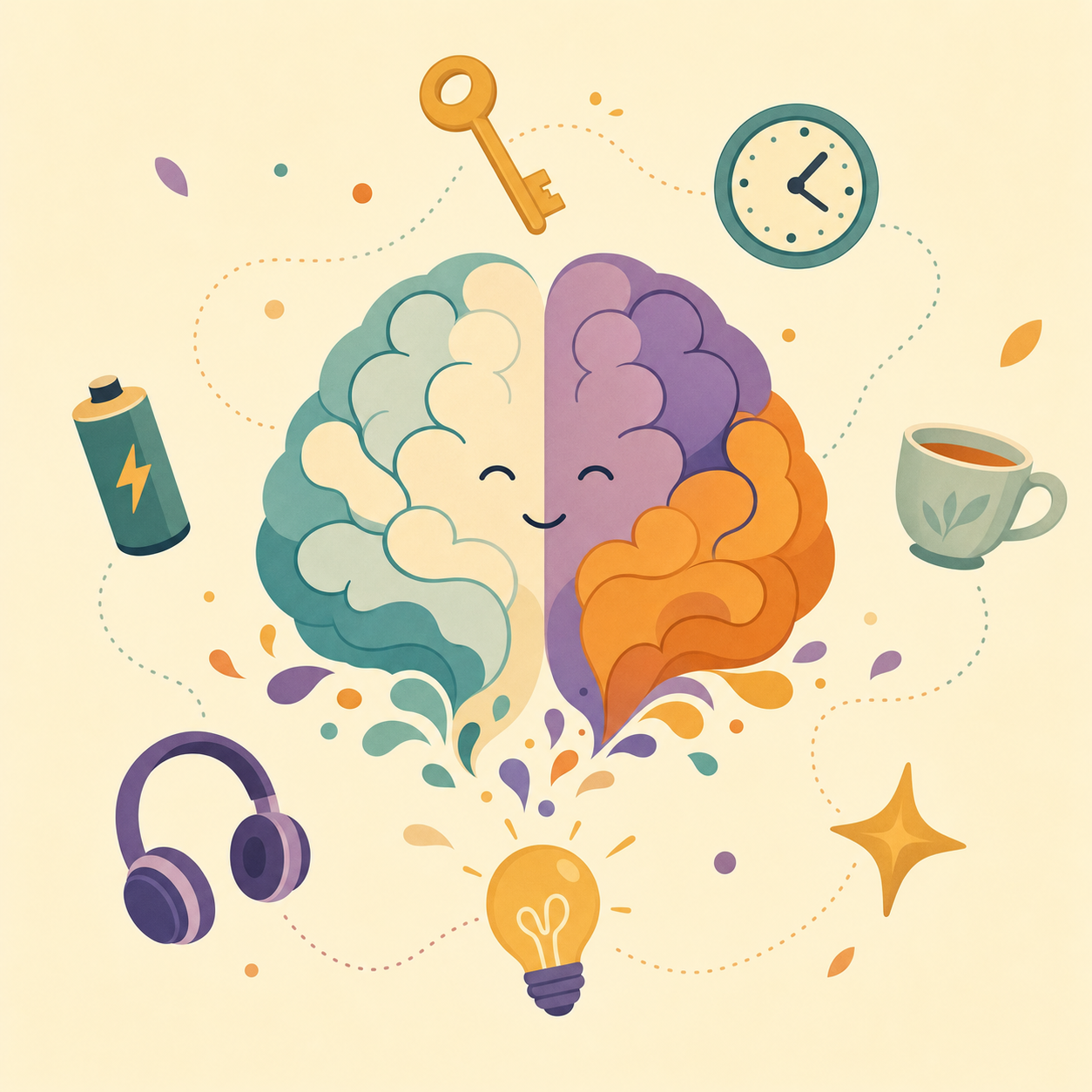
First, which brain sounds most like yours?
This just tunes the advice — it doesn't lock anything in. Pick "Not sure" if labels aren't your thing.
What's happening right now?
Browse by what you're struggling with, or search in your own words.
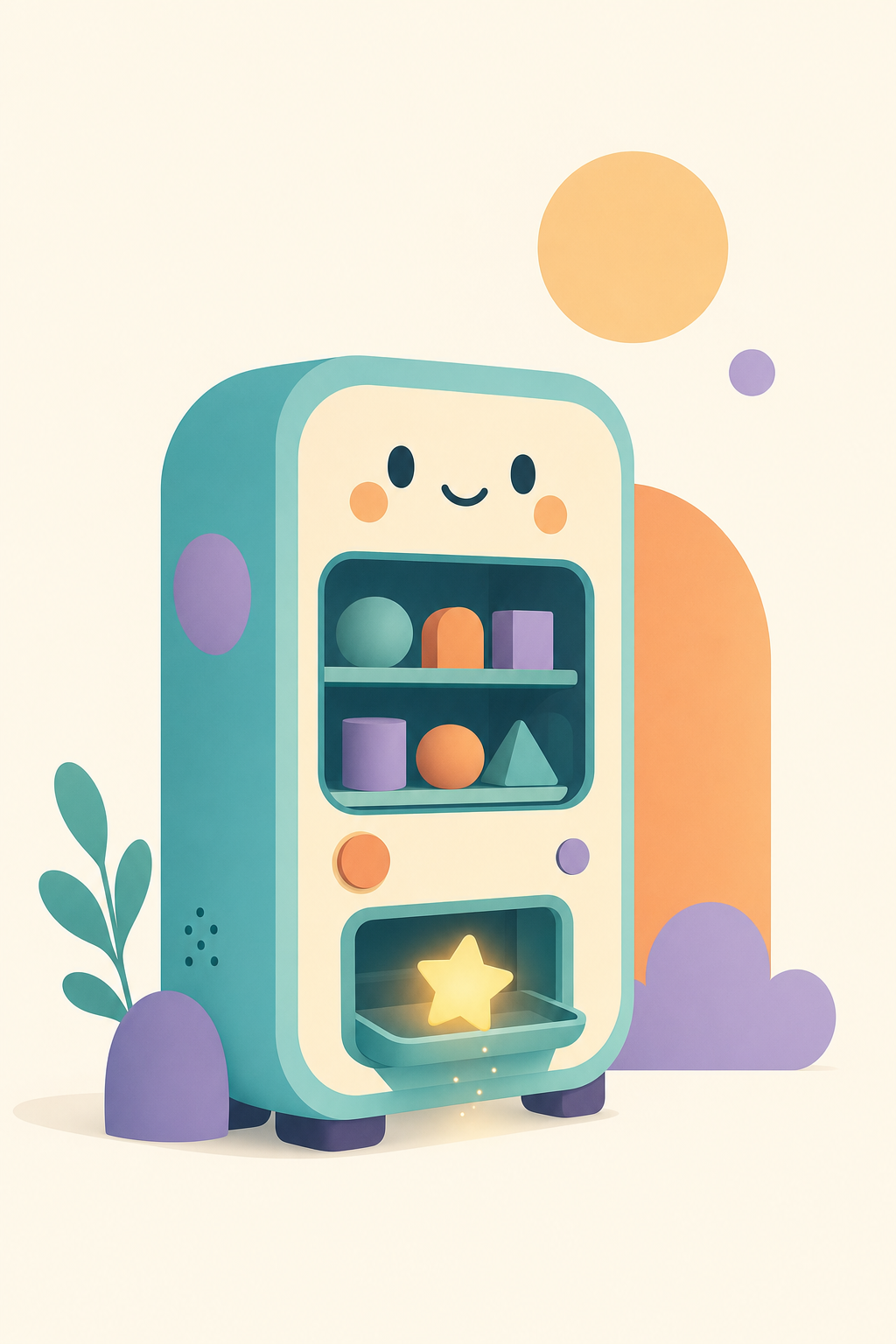
Can't pick? Try the strategy vending machine.
One low-effort action. Zero thinking required. Just press the button.
Going deeper
Externalise your executive function
Move memory and planning out of your head and into the world: visual schedules, checklists, alarms with labels, and micro-steps instead of "write report".
Manage sensory input & energy
Map your triggers, use noise-cancelling headphones and earplugs, create a low-stim recovery zone, and schedule breaks before you're exhausted — not after a shutdown.
Emotional regulation & self-compassion
Learn your early warning signs, build a pre-decided "pause plan", try brief grounding, and frame difficulties as brain differences — not personal failings.
Daily-life adaptations
Dedicated low-distraction workspaces, "landing zones" near the door for keys and wallet, automating recurring decisions, and outsourcing where you can to free up cognitive bandwidth.
Body doubling & accountability
Working alongside someone — in person or over a video call — lowers the cost of starting and sticking with tasks. It's one of the most effective, low-effort ADHD strategies, and it helps autistic focus too.
Sensory budgets
Think of sensory input like spending money. Track what drains you (noise, crowds, fluorescent light) and what restores you, then plan high-cost events with recovery time banked afterwards.
Transition rituals
A small repeated action — a breath, a phrase, a walk to the kettle — signals to your brain that one activity is ending and another is beginning. It eases task-switching and softens unexpected changes.
Masking, unmasking & burnout
Masking (hiding your natural traits to fit in) is a major energy drain and a leading cause of burnout. Identifying safe contexts to unmask — trusted friends, online communities — is recovery, not weakness.
Sleep & wind-down scaffolds
A fixed wind-down sequence with a transition cue (a song, dimmed lights, a warm drink) tells your nervous system it's safe to switch off. Protect the last hour from high-stimulation input, and keep wake times consistent.
Choice architecture & friction
Design your environment so the helpful choice is the easy one: put your book on the pillow, your phone charger across the room, healthy food at eye level. Add friction to what pulls you off-track, remove it from what helps.